
2025 Finite Element Industry Trends: Dual Drivers of AI Empowerment and Localization
In 2025, the Finite Element Analysis (FEA) industry has achieved leapfrog development amid technological innovation and market restructuring. The deep penetration of AI technology and accelerated localization process have emerged as core growth engines, driving the industry's profound transformation from tool application to value creation.
Technologically, the integration of AI and finite element analysis has sparked an efficiency revolution. Advanced dimensionality reduction and surrogate model technologies have achieved a breakthrough balance between accuracy and speed. The Deep Reduction Network (DRN) developed by MIT identifies critical stress-bearing areas through AI, reducing computational meshes by 80% while maintaining over 95% accuracy. Boeing has applied this technology to compress the optimization cycle of wing composite materials from 6 months to 3 weeks. Multi-physics coupling simulation has further broken through bottlenecks: the multi-scale data pipeline developed by Germany's Fraunhofer Institute connects nano-scale to macro-scale data streams, accurately predicting micro-cracks overlooked by traditional methods in the R&D of BMW's carbon fiber doors and increasing the fatigue test pass rate by 30%. Generative AI is reshaping R&D logic—the MatGAN system can generate 200 candidate material structures in 10 minutes, with 3 verified for use in new energy vehicle battery casings, significantly shortening the R&D cycle.
The market pattern shows an accelerating breakthrough in localization. China's CAE market reached 12.86 billion yuan in 2024 and is projected to grow to 14.42 billion yuan in 2025. While international giants still dominate the high-end market, local enterprises are rising rapidly: the penetration rate of independently developed solvers reached 28.6% in 2024, a year-on-year increase of 5.2 percentage points. Suochen Technology's solver has been applied in military and aerospace projects, achieving 21.7% revenue growth; Ansys China's software has entered CRRC's supply chain, realizing localized replacement for high-speed rail bogie optimization. Meanwhile, the SaaS model has lowered entry barriers: the cloud simulation service market reached 2.16 billion yuan in 2024, accounting for 43.7% of the technical service market, driving technology penetration among small and medium-sized manufacturing enterprises.
Application scenarios continue to deepen, with high-end manufacturing demand as the core driver. In the new energy vehicle sector, topology optimization reduces body weight by 8%-12%, boosting range by 5%-8%; in wind power, blade simulation extends the design life of 20MW-class wind turbines from 20 to 25 years and lowers operation and maintenance costs by 15%. The semiconductor sector contributes 18% of market growth—SMIC has reduced chip temperature by 12℃ and improved stability by 25% through thermal stress simulation. Policy support and industry-academia-research collaboration are strengthening: the 14th Five-Year Plan lists CAE as a key research area, and public service platforms have been established in Suzhou and other cities, driving a 40% increase in simulation adoption among small and medium-sized enterprises.
Overall, amid multiple transformations in technology, market, and applications, the finite element industry in 2025 is becoming a core technical pillar for the high-quality development of high-end manufacturing.

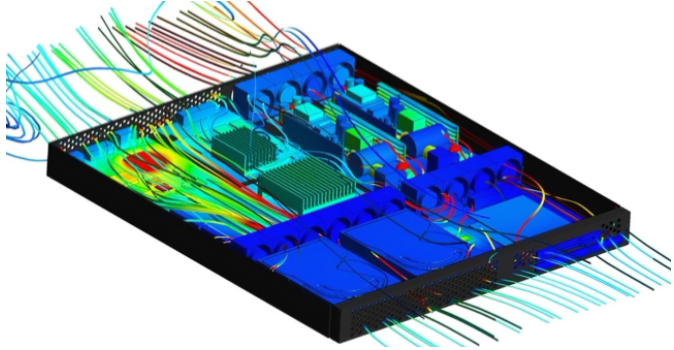
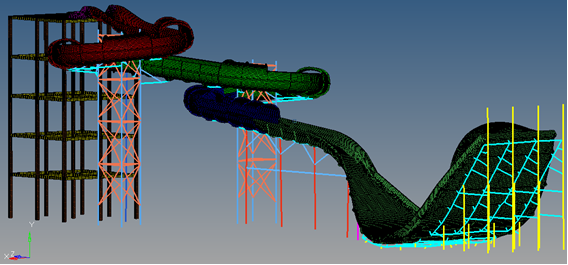
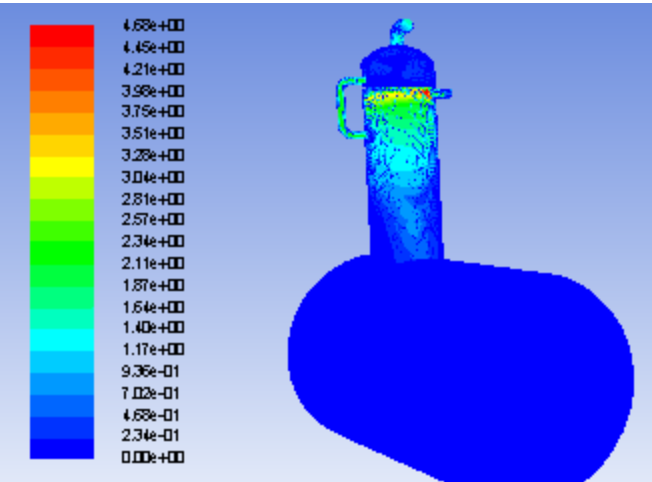
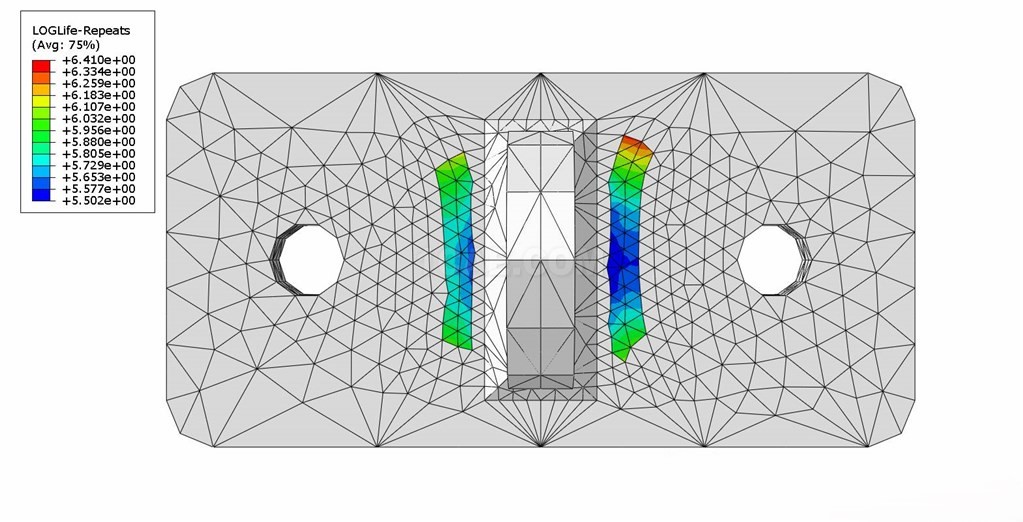
we specialize in CAE finite element calculation and simulation, virtual prototyping and simulation testing, and product design optimization for enterprises and institutions.

Copyright © 2025.Boye Engineering Technology All rights reserved. Yue ICP17017756Num-1